
Phycoforms: Building the Future with Seaweed
Researcher
Shimroth John Thomas
Published
08 June 2023
Funding
Design Strategy Grant
Seaweed is both ancient and futuristic. The earliest fossils date 1.6 billion years, so the modern-day seaweed has outlived the dinosaurs and several extinction events. Being neither plant nor animal, it photosynthesises in the ocean with certain species growing up to 60cm per day.
Moreover, it plays a pivotal role in the enhancement of ocean health through deacidification and serving as a carbon and nitrogen sink. As a fast-growing and renewable resource, seaweed farming could act as powerful tool in climate mitigation especially if the biomass was locked up into products such as building materials.
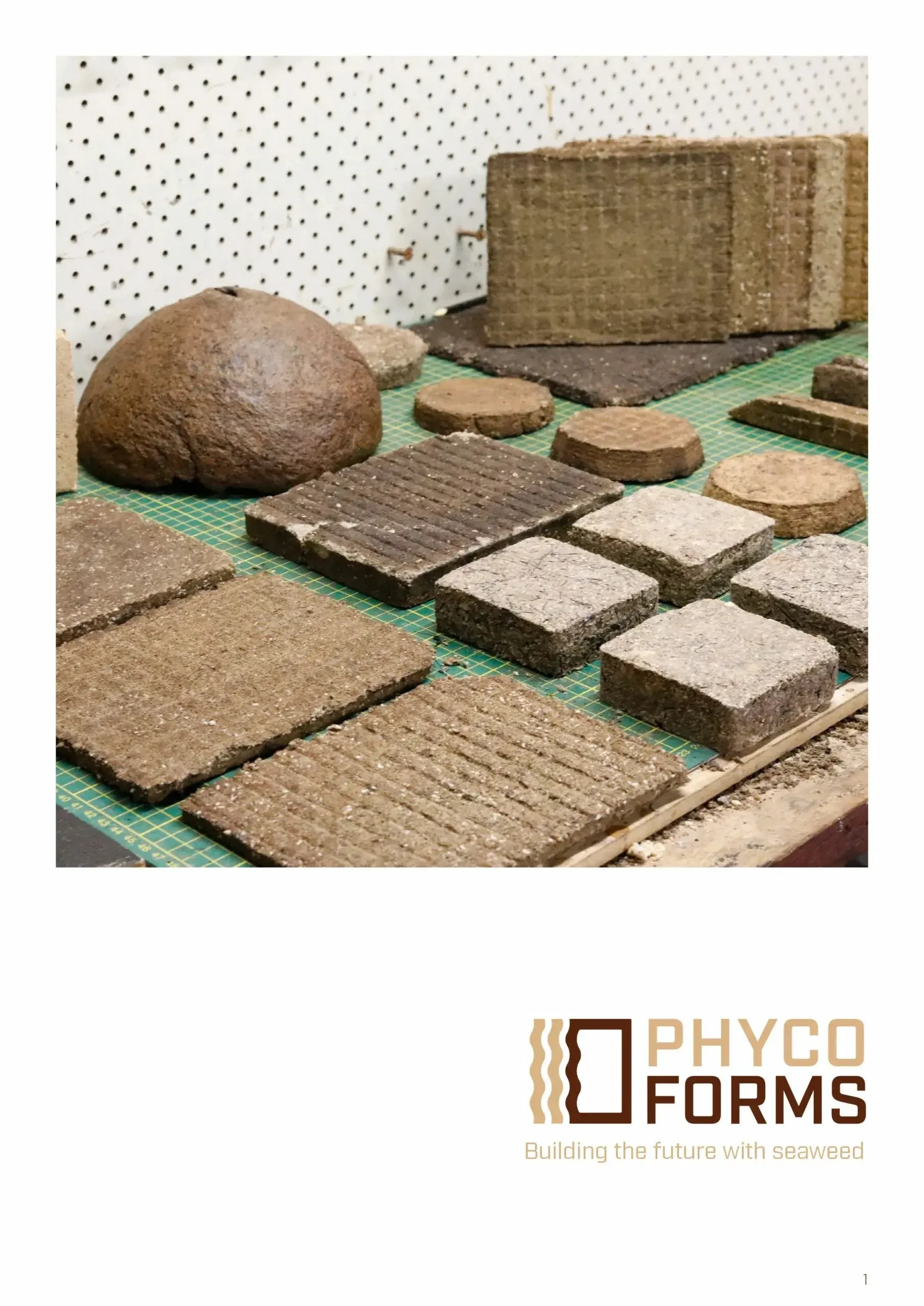
Phycoforms was created to explore the potential of utilizing biofouled content from the seaweed farming process to create rigid compressible seaweed biocomposites for the building industry. This material system exploration looks into the unique properties of alginate present in brown seaweed and how this can be utilized to make more resilient and fire-retardant building materials. Unlike traditional construction materials such as concrete or steel, seaweed-based architectural materials have a significantly lower embodied energy, thus helping to reduce greenhouse gas emissions associated with the built environment. By exploring various prototyping techniques and recipes using a combination of ocean waste and land waste, Phycoforms created a range of homewares, furniture and building blocks to better understand the potential of seaweed biocomposites in the future of architectural products.
